Beyond Consumer Confusion: How Far Does Vietnam Protect Geographical Indications Against Commercial Misappropriation?
Le Quang Vinh | Founding Partner, Bross & Partners
Email: vinh@bross.vn
Imagine a cheese made in Vietnam and marketed here as “Gorgonzola-style”, with its Vietnamese origin clearly disclosed. Can the Italian producer consortium stop the sale? What if a competitor avoids the protected name altogether, but uses imagery that strongly evokes the protected product?
For geographical indication (GI) holders, importers and food manufacturers, the answer matters commercially: a truthful origin statement is not necessarily a defence. Vietnam’s Intellectual Property Law and the EU–Vietnam Free Trade Agreement (EVFTA) offer distinct legal grounds for challenging such practices, without necessarily offering the same protection as EU law.
1. From trademark confusion to GI evocation
Article 13(1)(b) of Council Regulation (EEC) No 2081/92 expressly introduced evocation into the EU agricultural and food GI regime. Gorgonzola v. Cambozola (C-87/97, 4 March 1999). The defendants invoked SABEL v. Puma (C-251/95), a trademark case distinguishing mere association from confusion. The Court of Justice of the European Union (CJEU) held that evocation may occur even without confusion between the products. The similar names and comparable blue cheeses supported the conclusion that Cambozola could evoke Gorgonzola. The preliminary ruling did not itself impose a final injunction: the national court also had to examine the earlier trademark and the good-faith exception under Article 14(2). [1–2]
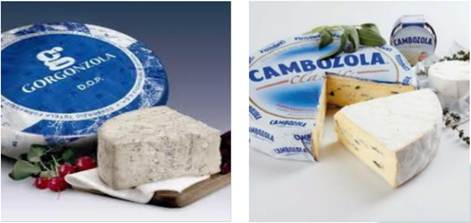
Figure 1. Gorgonzola PDO (left); Cambozola commercial packaging (right). Credit: Vieri Canepele, UniPisa Food Quality Management presentation (25 June 2020), slide 47. Cropped for illustration; these photographs have not been authenticated as exhibits in the 1999 proceedings. Image source
In trademark disputes governed by the likelihood-of-confusion test, consumers may mistake one mark for another, or recognise the difference yet wrongly infer common commercial origin or an economic connection. Mere recollection of another trademark does not satisfy that test.
GI evocation addresses a different question: does the disputed sign bring the protected product directly to the mind of the average European consumer, even if the consumer knows that the competing product comes from elsewhere? Mere association with a geographical region is insufficient. The mental link must concern the protected product itself. In the EU, reputation-based trademark protection may also operate without confusion, under a separate legal test.
2. Evocation without copying the protected name
Scotch Whisky Association (C-44/17, 7 June 2018). German whisky was marketed as Glen Buchenbach, with its true origin disclosed. Thinking of Scotland is not necessarily equivalent to thinking of Scotch Whisky. The latter mental connection, if sufficiently clear and direct, may establish evocation without deception as to origin. Neither visual nor phonetic resemblance is indispensable.
The Hamburg Higher Regional Court subsequently prohibited the defendant’s commercial use of Glen Buchenbach for non-Scotch whisky in Germany on 20 January 2022 (5 U 43/19). [3–4]
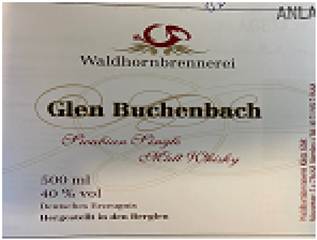
Figure 2. The disputed Glen Buchenbach label. Credit: Hanseatisches Oberlandesgericht Hamburg, judgment 5 U 43/19, p. 3, reproducing the label from exhibit MS 1. Image source
Queso Manchego (C-614/17, 2 May 2019). A Spanish producer used Don Quixote imagery, windmills and related names on cheeses made in La Mancha but outside the PDO specifications. The CJEU held that figurative signs can evoke a protected name even when used by a producer established in the region. The Spanish Supreme Court subsequently found infringement and partially invalidated a trade name and two composite trademarks (judgment 451/2019). [5–6] Being located within the protected region is therefore not necessarily a defence.
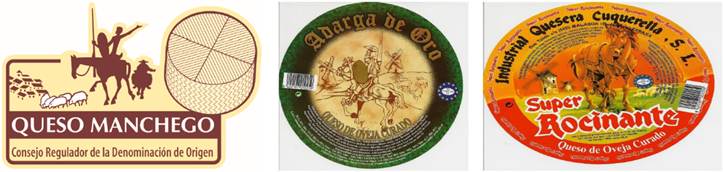
Figure 3. Queso Manchego designation logo (left); challenged Adarga de Oro and Super Rocinante labels (centre and right). Credit: Virginia Melgar, EUIPO, TM and GIs: Examples of Case Law (2021), slide 34. Cropped and arranged from the cited presentation. Image source
Champanillo (C-783/19, 9 September 2021). A Spanish tapas-bar operator used a name suggesting Champagne together with two sparkling-drink glasses. The CJEU held that evocation can extend to services, without requiring the goods and services concerned to be identical or similar. [7]
Could a Champagne producer group challenge a similarly named bar in Vietnam, even if it sold no unlawfully labelled Champagne? The European ruling alone would not establish liability here.
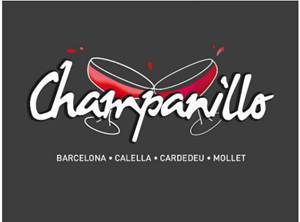
Figure 4. Champanillo restaurant sign. Credit: AIPPI 2022,
Case Law Update Part II: Europe and the United States, slide 10. Cropped from the cited presentation. Image source
Article 26(1)(b) of Regulation (EU) 2024/1143 retains evocation as a distinct prohibited practice. Its limits matter: in PORT CHARLOTTE (C-56/16 P), the evocation challenge failed because the name was understood as referring to a harbour rather than Port wine. [8, 15]
3. Vietnam already protects GIs beyond geographical-origin deception
Article 129.3 of Vietnam’s IP Law distinguishes four forms of GI infringement: [9]
- Use on goods originating in the protected region that fail the protected GI’s distinctive quality or characteristic requirements (a).
- Use of a protected GI for similar products to exploit its reputation or prestige (b).
- Use of identical or similar signs on products from elsewhere, misleading consumers about geographical origin (c).
- Unauthorised use of wine or spirit GIs on non-originating wines or spirits, notwithstanding origin disclosures or relevant qualifying expressions (d).
Only point (c) expressly requires geographical-origin deception. Point (b), unlike EU evocation, requires a reputation-exploitation purpose. Packaging, advertising, naming history and market reputation may help establish that purpose. This evidentiary approach, however, is not a settled Vietnamese judicial standard.
Article 78 of Decree 65 links its confusing-similarity criterion to misleading geographical origin. Yet, in the context of administrative enforcement, Article 15.2(d) of Circular 11 expressly addresses identical or similar signs used on similar products to exploit GI reputation and/or mislead consumers about geographical origin. [10, 14]
The wording provides an arguable basis for challenging similar signs that exploit GI reputation without geographical-origin deception. Its reach must nevertheless be reconciled with Article 129.3(b), which refers to use of the protected GI itself. A ministerial circular cannot independently expand statutory liability.
Vietnamese law therefore offers grounds for protection beyond geographical-origin deception, but does not establish an autonomous EU-style evocation test.
4. EVFTA: a stronger route for qualifying European GIs
Article 12.27.1(a) EVFTA protects listed GIs against use for products in the designated class originating outside the specified country or failing the applicable production requirements within that country. Article 12.27.2 extends that protection even where actual origin is disclosed, or the GI is translated or accompanied by type or imitation qualifiers.
Article 12.27.1(b) separately addresses misleading presentation, while point (c) addresses unfair competition. Neither expressly establishes evocation as a separate infringement ground. [11]
But how does this enhanced protection become enforceable in Vietnam? Article 17.20 EVFTA generally excludes direct effect but expressly permits Vietnam to provide otherwise. Vietnam has done so through National Assembly Resolution 102/2020/QH14. Article 2.1 and Appendix 2, item 12 provide for direct application of Article 12.27.2 and extend wine-and-spirit-level protection to EU GIs listed in Part A of Annex 12-A. [11, 13]
Vietnam’s Law on Treaties (Article 6) and Law on Promulgation of Legislative Documents (Article 58.5) also provide for treaty priority where domestic rules and applicable treaty provisions differ on the same matter, subject to the Constitution. The enhanced protection supplements the ordinary GI regime without importing EU law as a whole. [16]
Accordingly, “Gorgonzola-style – Made in Vietnam” is not necessarily lawful merely because the geographical disclosure is accurate. There are important exceptions:
- Qualifying actual good-faith commercial uses in Vietnam before 1 January 2017 of Asiago, Fontina and Gorgonzola for cheese, and Feta for sheep’s-milk or sheep’s-and-goat’s-milk cheese.
- A ten-year transitional arrangement for Champagne, ending in 2030, for qualifying actual good-faith commercial use in Vietnam for wines.
- Certain earlier good-faith trademark rights under Article 12.30.
The protected earlier users under Article 12.28 may include their successors. Article 125.2(g) and (h) of the IP Law also recognise qualifying earlier trademarks and honest descriptive use. These defences must be assessed alongside the applicable treaty protection, not in isolation. [9, 11, 13]
Article 12.31 requires GI enforcement at least upon an interested party’s request. The enhanced substantive protection does not, however, guarantee a particular remedy or sanction under Vietnamese law.
5. The correct comparator: geographical name, not automatically its logo
Vietnam’s register records, among others, Phu Quoc for fish sauce, Cognac for spirits, Buon Ma Thuot for coffee beans and Doan Hung for pomelos. [12] Where protection attaches to a name, the legal comparator is that name in its registered or treaty-protected scope, not merely the promotional logo used by an association. A different font, colour or layout does not neutralise otherwise unlawful use of the protected name. Conversely, copying regional imagery or an identification logo does not automatically establish GI infringement. An associated logo may enjoy separate trademark or other IP protection, which requires its own assessment.
Article 213.3 separately defines GI counterfeit goods by reference to signs identical to, or so similar as to be difficult to distinguish from, the protected GI, affixed without entitlement to the goods for which the GI is protected, or their packaging, stamps or labels. Infringement and counterfeiting are not interchangeable. The distinction can determine which enforcement measures are available.
6. Turning a GI right into an enforceable claim
For a consortium or international counsel confronting suspect goods in Vietnam, four questions should precede a demand letter or enforcement request:
- Scope and standing: What exactly is protected, under which legal instrument, and who is entitled to enforce it?
- Legal classification: Is the conduct non-compliance with GI specifications, exploitation of reputation, geographical-origin deception, treaty-prohibited use or counterfeiting?
- Evidence: What do the packaging, advertisements, product samples, supply chain and Vietnamese market evidence establish?
- Defences and remedies: Are earlier rights, treaty exceptions or honest descriptive use relevant? Which enforcement procedure is available?
Consider three hypothetical fish sauces: one made outside Phu Quoc bearing its protected name; another made on the island but failing GI specifications; and a third using only imagery recalling the protected product. Each requires a distinct legal analysis. The third is particularly difficult. Reputation exploitation and unfair competition may warrant investigation, but an EU evocation ruling is not an independent basis for enforcement in Vietnam. No publicly verified Vietnamese decision applying a free-standing evocation test is relied upon here.
Conclusion
The distinction is commercially significant: conduct prohibited by EU law may also be actionable in Vietnam, but not necessarily for the same legal reasons.
A truthful geographical disclosure or a different brand design may not cure GI misuse. Equally, a protected name does not confer ownership of every cultural association with its region.
The challenge is to identify the right Vietnamese legal ground, test the available defences and assemble evidence sufficient for the chosen enforcement procedure.
Bross & Partners advises on the scope and enforceability of GI rights, treaty exceptions, conflicts with trademarks and enforcement strategies in Vietnam. This is the first article in our series on GI disputes and enforcement in Vietnam.
Legal authorities and image references
- CJEU, C-87/97, Gorgonzola, paras. 24–27 and operative part.
- CJEU, C-251/95, SABEL, paras. 18–26.
- CJEU, C-44/17, Scotch Whisky Association, paras. 51–60.
- Hamburg Higher Regional Court, 5 U 43/19, 20 January 2022.
- CJEU, C-614/17, Queso Manchego, paras. 33–43.
- Spanish Supreme Court, judgment 451/2019, 18 July 2019, ECLI:ES:TS:2019:2464.
- CJEU, C-783/19, Champanillo.
- Regulation (EU) 2024/1143, Article 26.
- Vietnam IP Law, Articles 6, 123, 125, 129, 130 and 213.
- Decree 65/2023/ND-CP, Articles 72 and 78, as amended.
- EVFTA, Articles 12.27–12.32 and 17.20.
- IP Vietnam, List of registered geographical indications.
- National Assembly Resolution 102/2020/QH14, Article 2 and Appendix 2.
- Circular 11/2015/TT-BKHCN, as amended by Circular 06/2024/TT-BKHCN, Article 15.
- CJEU, C-56/16 P, PORT CHARLOTTE, paras. 120–126.
- Law on Treaties, Article 6 (consolidated text 10/VBHN-VPQH, 2026);Law on Promulgation of Legislative Documents, Article 58 (consolidated text 54/VBHN-VPQH, 2025).



Leave a Reply