Vietnam Trademark Cancellation: Why Bad Faith Is Not a Shortcut
Le Quang Vinh | Bross & Partners
Knowledge of a brand, copying and a distributor relationship may support a trademark challenge in Vietnam, but they do not, by themselves, identify the ground that will succeed. Two published decisions show why the applicable law, entitlement to register and evidence of prior use must be examined separately. This opening article in the four-part series “Vietnam Trademark Cancellation: Misconceptions That Can Cost the Case” examines how to choose the legal ground. The next three articles address the five-year limitation, the scope of well-known-mark protection and the proof required to sustain a challenge.
“Bad faith” sounds deceptively simple. For a business owner, it often means something very practical: they knew this was our brand, yet they registered it in their own name. The facts may involve a distributor, importer, former partner or another party that had access to the genuine owner’s products and branding before filing. The TM5 offices treat bad-faith trademark filings as a shared international problem. Their project identifies a familiar scenario: a third party seeks to register another business’s identical or similar mark to exploit its absence of registration. That description captures the commercial concern; it is not a uniform legal test binding the participating offices or Vietnam
Bad faith, entitlement and the law governing the registration
Vietnam’s Intellectual Property Law does not provide a single abstract definition of bad faith. Under former Article 96.3, “sự không trung thực” (dishonesty) operated as an exception to the five-year limitation period for seeking trademark cancellation. From 1 January 2023, amended Article 96.1(a) expressly introduced registration with “dụng ý xấu” (bad faith) as an independent cancellation ground.
The distinction matters for older registrations. Article 4.5 of Law No. 07/2022/QH15 ties cancellation grounds to the law governing examination for grant; Article 3.4 of Law No. 131/2025/QH15 preserves that approach. A decision issued after 2023 does not, by its date alone, make the independent bad-faith ground available.
Article 87 asks a different question: who is entitled to register? Under Article 87.2, a lawful trader may register a mark for goods manufactured by another party only if the producer neither uses that mark for the goods nor objects to the registration. Lack of entitlement is addressed by former Article 96.1(a), now Article 96.2(a), separately from the current bad-faith ground.
The same evidence may serve different purposes. Trading records may prove knowledge and distribution; documents bearing the producer’s mark may support lack of entitlement. For a current bad-faith claim, counsel must also establish the applicable elements under Article 112.3 of Circular No. 10/2026/TT-BKHCN. Its two alternative branches address specified patterns of excessive filings without evidence of genuine intended use, or appropriation of qualifying marks for improper purposes. Knowledge alone is not the stated test.
Two decisions of the Intellectual Property Office of Vietnam (VNIPO), concerning registrations examined under the earlier law, illustrate why those distinctions affect the outcome. This article concerns cancellation under Article 96 of the Intellectual Property Law.
SW & device: lack of entitlement succeeded where prior-use evidence fell short
The cancellation requester sought cancellation of Registration No. 308843 for an SW & device held by the registrant. It alleged dishonest filing and relied on the parties’ prior dealings in valve products.
Before the registrant filed on 28 January 2016, it had purchased valves directly from the cancellation requester. Sales contracts, quotations, commercial invoices and shipping documents predated the application. According to VNIPO’s description, both devices contained SW within an inverted triangle; the cancellation requester’s triangle had a break in its upper edge, whereas the registered device had a continuous outline. VNIPO considered that difference insufficient to alter their substance.
The cancellation requester advanced two principal theories: the registrant lacked entitlement under Article 87.2, and the earlier SW mark had been used and widely recognised in Vietnam so as to defeat the registration under Article 74.2(g). Those theories required different proof.
The entitlement argument succeeded. VNIPO found that the registrant had imported and distributed valves bearing the cancellation requester’s SW device before filing. The producer itself used the mark for those goods, so the trader did not satisfy Article 87.2.
The Article 74.2(g) argument failed. Although the cancellation requester identified several Vietnamese businesses trading in its valves, VNIPO found the evidence insufficient to establish the required widespread use in Vietnam before the filing date. Evidence sufficient to establish a supplier–distributor relationship did not establish the market position required by that separate ground.
VNIPO nevertheless cancelled the registration in full. Its formal citations warrant care: the conclusion lists Article 74.2(g) despite rejecting that argument, and cites former Article 96.1(b), although lack of entitlement was separately addressed by former Article 96.1(a). The reasoning nevertheless identifies Article 87.2 as the substantive basis for cancellation. The decision does not establish bad faith under the independent ground introduced in 2023.
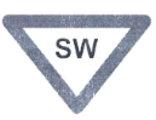
Registration No. 308843 — Cancelled in full
[Decision No. 224130/QĐ-SHTT of 30 September 2025]
HYUNDAIDOOR: the distributor relationship did not establish the pleaded grounds
In the challenge to HYUNDAIDOOR, Registration No. 227656, the cancellation requester had appointed the registrant as a distributor of aluminium products before the application. It argued that the distributor knew its HYUNDAIWINDOW branding and sought HYUNDAIDOOR to appropriate its rights. The request relied principally on Articles 74.2(g) and 87.2. Both arguments failed.6
On Article 74.2(g), VNIPO found that use before the 29 April 2010 filing was relatively short and that the evidence did not sufficiently establish sales volume, customer recognition or the required widespread use and recognition in Vietnam. Some advertising postdated the application and could not establish that earlier market position.
On Article 87.2, VNIPO acknowledged the distribution relationship but found that the cancellation requester used HYUNDAIWINDOW, not HYUNDAIDOOR, for the aluminium products. On that record, it rejected the argument that the registrant lacked entitlement under the provision. The cancellation request was refused.
The contrast with SW & device is useful but should not be overstated. VNIPO treated the differences between the two SW devices as immaterial; in HYUNDAIDOOR, it relied on the distinction between the sign used and the sign registered. These decisions do not establish that Article 87.2 requires literal identity, or that a distributor may freely register a variation of its supplier’s brand. They show how the signs and evidence were assessed in those particular proceedings.
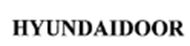
Registration No. 227656 — Cancellation request rejected
[Decision No. 4560/QĐ-SHTT of 15 October 2021]
Knowledge does not determine the cancellation ground
The tempting inference is that knowledge proves dishonesty and dishonesty necessarily requires cancellation. That merges distinct propositions. A commercial relationship may establish how the applicant encountered a sign without proving lack of entitlement, the market recognition required by Article 74.2(g), or the elements of an available bad-faith ground. Conversely, failure under Article 74.2(g) does not automatically dispose of a separate entitlement or bad-faith argument.
The first decision is therefore which legal defect the facts support. Does the case concern the applicant’s entitlement to register, a conflict with an earlier mark meeting the applicable protection threshold, or bad faith under a legally available ground? Several grounds may be pleaded where justified, but each must retain its own legal basis. A weak prior-use argument should not be relabelled as bad faith, and an entitlement argument need not depend on proving widespread recognition.
Limitation periods, the reach of the earlier right and the sufficiency of the evidence require separate assessments. The remaining articles in this series address those questions. The point here is narrower: identify the available ground before deciding how to build the challenge.
Choose the ground before committing to a cancellation strategy
Vietnam’s express bad-faith ground adds an important route to cancellation, but it does not replace entitlement or prior-rights analysis. SW shows that a commercially troubling filing can be cancelled through entitlement reasoning even where the prior-use argument fails. HYUNDAIDOOR shows that a distributor relationship does not, by itself, establish the grounds pleaded. Neither outcome determines how a different record would fare under today’s bad-faith rules.
For a brand owner, the practical question is therefore not simply whether the filing looks dishonest. It is whether an available ground can be proved, within the applicable time limit, for the registration and goods at issue. That assessment informs whether to pursue cancellation, obtain further evidence or consider a negotiated solution. Bad faith may be the right ground, another ground may be stronger, or the available evidence may support neither. It is not a shortcut to proving the legal defect.
This article provides general information as at September 2026 and does not constitute legal advice on any particular trademark or cancellation proceeding.
For advice on the available grounds, evidence and strategy for challenging a Vietnamese trademark registration, please contact Le Quang Vinh at Bross & Partners.
LinkedIn | Email: vinh@bross.vn | Mobile: +84 903 287 057
Whatsapp: +84 903 287 057 | Microsoft Teams: vinh@bross.vn

Để lại một bình luận