Vietnam Trademark Cancellation: How Far Does a Well-Known Mark Reach?
Le Quang Vinh | Bross & Partners
A well-known mark can support a cancellation request beyond its usual product market in Vietnam. But how far does that protection reach? Recognition of the earlier mark and the right to remove the particular registration remain distinct questions. Three published VNIPO decisions show why the signs, the goods and the scope of the reputation claim must be considered together.
This is Part 3 of “Vietnam Trademark Cancellation: Misconceptions That Can Cost the Case”. Parts 1 and 2 examined the choice of cancellation ground and the five-year limitation, including why a prior distributor or business relationship does not by itself establish bad faith. This article examines the reach of a well-known-mark claim; Part 4 addresses how the required propositions should be proved.
What does famous status change?
Vietnamese law defines well-known status by widespread recognition among the relevant public in Vietnam. Article 75 permits assessment using some or all of its listed criteria. The current wording of Article 74.2(i) expressly requires the earlier mark to have been well known before the relevant filing date. Commercial prominence abroad does not itself establish that threshold. The decisions below applied the law governing the challenged registrations, not every part of the 2026 wording. Each nevertheless exposes a different break between reputation, similarity and reach.
Article 74.2(i) begins with an identical or confusingly similar sign. It covers registration for goods or services identical or similar to those bearing the well-known mark. It can also reach dissimilar goods or services, but only if use may impair the well-known mark’s distinctiveness or the registration was aimed at exploiting its reputation. The structure matters: establishing recognition does not dispense with comparing the signs, and dissimilarity does not itself defeat the claim. The asserted right and the challenged registration must be connected through the statutory route actually relied on.
This matters commercially in both directions. A brand owner should not assume that recognition in one field secures cancellation in every other field. A registrant should not assume that operating in a different product category ends the dispute. Class numbers alone cannot answer either question.
Reputation does not settle the comparison of signs
In Decision No. 4536/QĐ-SHTT of 23 September 2022, VNIPO rejected the challenge to Registration No. 265752 for “SENKO ISO 9001:2008, device”, covering electric fans in Class 11 and filed on 24 April 2014. The cancellation requester relied on earlier SEIKO registrations and asserted well-known status.
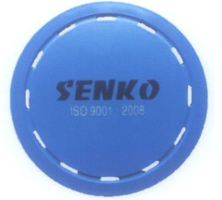
Reg. 265752 – cancellation request rejected
VNIPO expressly treated the goods as similar: cooling and ventilation equipment under the earlier registration and electric fans under the challenged registration. It nevertheless distinguished the signs, considering pronunciation, the difference between “I” and “N”, and the additional blue circular device and “ISO 9001:2008” wording.
The requester had cited Seiko’s corporate history since 1881, SEIKO registrations in more than 190 countries and territories, and official imports and distribution in Vietnam from 1986. Even so, the authority separately found the submitted material insufficient to establish that SEIKO was well known in Vietnam under Article 75. This was not a case of recognised well-known status defeated solely by differences between the signs. There were adverse findings on both status and similarity.
The scope lesson is narrower but important: similar goods did not settle the sign comparison. A reputation claim could not replace an answer to that comparison. The decision also supplies no general rule that changing one letter or adding other elements avoids conflict; it concerns the overall signs in that record. It further shows that assertions of corporate pedigree, worldwide registrations and long-standing market presence must still be tied to the Vietnamese legal threshold; Part 4 addresses that evidentiary problem.
A successful cancellation identifies a particular conflict
ZAVESCA illustrates a more direct conflict. Decision No. 2379/QĐ-SHTT of 15 May 2019 cancelled Registration No. 119055 for ZAVESCA, covering pharmaceuticals in Class 5. The cancellation requester relied on the identical word for its pharmaceutical product.

Reg. 119055 – cancelled in full
VNIPO considered international recognition, registrations and distribution, then explained why the identical later mark would mislead consumers about origin, including by suggesting a connection with the earlier mark or a common owner. The registrant’s representative requested a one-month extension, but VNIPO recorded no substantive response. The published record therefore does not show a substantive defence, but VNIPO still gave affirmative reasons for cancellation under Article 74.2(i), read with Article 96.
The result rests on an identified conflict within pharmaceuticals. It does not establish how far the same reputation would reach into an unrelated market. The published reasoning also does not separately develop a detailed assessment of recognition among the relevant public in Vietnam; instead, it says the submitted materials showed that ZAVESCA had long been widely known in many countries. Its usefulness lies in the specific conflict resolved, rather than a general formula for recognition or protection across all goods.
Different goods require a closer reading of the claimed protection
The NIKO decision concerned goods that VNIPO itself regarded as dissimilar. Decision No. 2377/QĐ-SHTT of 15 May 2019 rejected cancellation of Registration No. 202137 for NIKO, filed on 3 June 2011. Its specification included blenders and vacuum cleaners, feeding bottles, plastic furniture and household articles in Classes 7, 10, 20 and 21. The cancellation requester relied on NIKON and NIKKOR registrations for cameras and other Class 9 products.

Reg. 202137 – cancellation request rejected
The cancellation requester argued that the goods shared retail channels and ordinary consumers, and that use of NIKO would diminish the recognition and reputation of the earlier mark even beyond competing products. Those were submissions, not findings by the authority.
Read in context, the reasoning appears to have proceeded on NIKON as the well-known camera mark underlying the claim. The published text contains an apparent clerical inconsistency: one sentence says “NIKO” was well known for cameras, although the surrounding references identify NIKON, Registration No. 10289 and Nikon. That inconsistency should be disclosed rather than silently corrected. The authority distinguished NIKO from NIKON by structure and pronunciation, found the goods wholly dissimilar, and rejected confusing similarity with NIKKOR. The registration remained in force.
The published reasoning in NIKO did not record an adverse finding on the evidence of NIKON’s reputation. It focused instead on the differences between the signs and the dissimilarity of the goods. The decision should not, however, be turned into a rule that dissimilar goods defeat well-known-mark protection. Its published assessment did not separately explain why the alleged impairment of distinctiveness or exploitation of reputation failed. It records the rejection of the cancellation request on that particular record, not a general rule defining the outer limit of Article 74.2(i).
That limited explanation matters. Article 74.2(i) expressly contemplates dissimilar goods, so dissimilarity triggers the additional statutory conditions; it is not a complete answer. A cross-market request should formulate the sign comparison and the alleged impairment or exploitative purpose separately and seek findings on each. Otherwise, the matter may end at the comparison stage without clarifying Article 74.2(i)’s outer boundary.
The statutory alternatives must therefore remain distinct. Possible impairment of distinctiveness concerns what use of the later sign may do to the earlier mark’s identifying function. Registration aimed at exploiting reputation concerns the purpose of registration. A cancellation requester need not establish both cumulatively, but must substantiate the route relied on.
Dilution by blurring is useful shorthand for the first concern; unfair advantage or free-riding helps explain the second. Neither expression replaces the Vietnamese wording. An alleged association or commercial benefit alone does not establish that the registration was aimed at exploiting reputation. Here, free-riding describes Article 74.2(i)’s reputation-exploitation limb, not a separate bad-faith ground. Article 74.2(i) still requires an identical or confusingly similar sign.
Define the reach before committing to cancellation
The three decisions answer different questions. SEIKO/SENKO separates sign comparison from goods similarity and asserted status. ZAVESCA is a successful same-field challenge. In NIKO, the published reasoning did not reject the reputation claim, yet still refused cancellation because of the differences between the signs and goods, while leaving impairment and exploitation underdeveloped. Together, they support a restrained proposition: well-known status can widen protection, but the outcome still turns on the signs, goods and statutory route. These administrative decisions concern particular records; they are not binding precedents or substitutes for the statute.
For a business considering a challenge, the question is whether the earlier right reaches the actual registration. Before filing, counsel should answer four points: whether well-known status existed by the relevant date; how close the signs are; how the goods, markets and public relate; and, for dissimilar goods or services, whether impairment or an exploitative purpose can be proved. For a registrant, the question is which link in that claimed reach withstands scrutiny. Brand success is only part of the answer.
This article provides general information as at September 2026 and does not constitute legal advice on any particular trademark or cancellation proceeding.
Bross & Partners advises brand owners and registrants on whether a well-known-mark cancellation claim is legally and commercially viable, how the claim should be framed, and how the record should be built or challenged. For advice on bringing or defending trademark cancellation proceedings in Vietnam, please contact Le Quang Vinh at Bross & Partners.
LinkedIn | Email: vinh@bross.vn | Mobile: +84 903 287 057
WhatsApp: +84 903 287 057 | Microsoft Teams: vinh@bross.vn

Để lại một bình luận